

Dental hygiene explained: What happens at your appointment? A thorough exam
Your dental hygiene appointment typically starts with an exam. Your hygienist or dentist will:
- Check your gums for signs of inflammation or bleeding
- Look for visible cavities or damaged fillings
- Examine your tongue, throat, and cheeks for signs of oral cancer
This step is quick but crucial. It helps catch problems early—often before you even notice symptoms.
Removing Plaque and Tartar
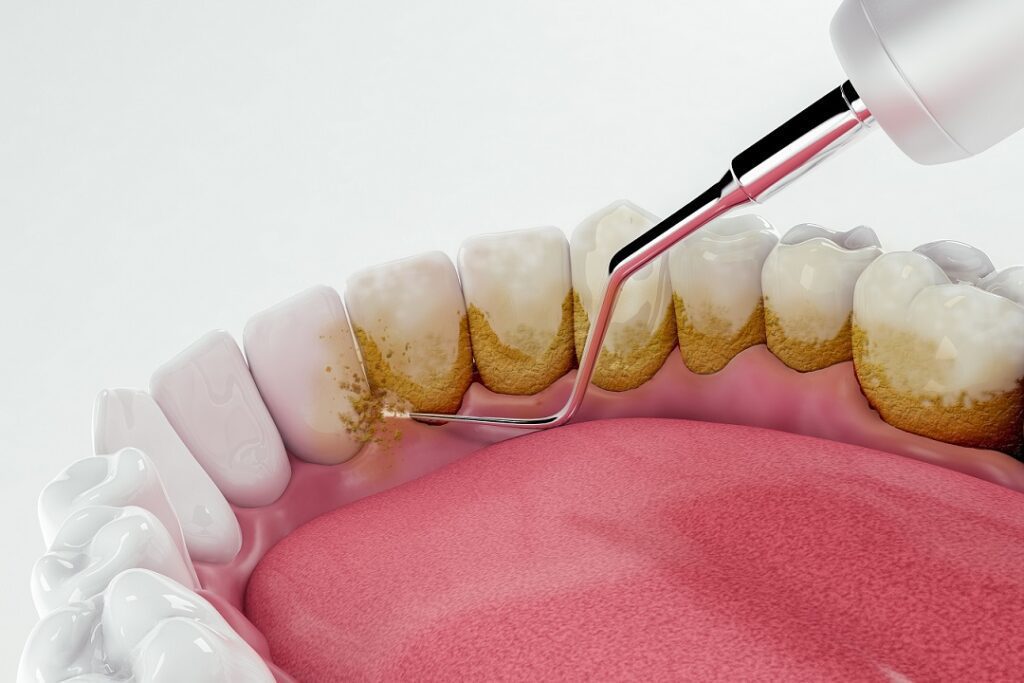
Even with excellent brushing and flossing habits, it’s almost impossible to completely remove all plaque at home. Over time, plaque hardens into tartar (calculus), which can only be removed with professional tools.
Your hygienist uses a small mirror and a scaler to gently remove tartar around your gumline and between teeth. If you have more buildup, it may take a bit longer. Removing tartar is essential because it harbours bacteria that cause tooth decay and gum disease.
Professional Tooth Polishing
Once the tartar is gone, your hygienist will polish your teeth using a special gritty toothpaste and a high-powered electric brush. This polishes away minor stains from food and drinks, leaving your teeth smooth and shiny.
It may feel a little like a tickling vibration, but it’s painless—and many patients love how fresh their mouth feels afterward.
Fluoride treatment (if needed)
Depending on your risk of cavities, your dentist might recommend a fluoride treatment to strengthen your enamel. This is usually a quick brush-on varnish.
Why Are Regular Cleanings So Important?
Dental cleanings do much more than give you a pretty smile. They help:
- Prevent cavities by removing bacteria-harbouring plaque and tartar
- Protect your gums from disease that can lead to tooth loss
- Help keep your gum disease in check and help slow its progress
- Catch early signs of problems like decay or oral cancer
- Keep your breath fresh and your mouth healthy
Most people should have a cleaning every six months, but some need them more often. If you have gum disease, heavy tartar buildup, or braces, your dentist might recommend coming every 3-4 months. This is entirely customised for each patient and for their specific needs at the time. This schedule can be moved up and down depending on your current needs. It is definitely not a one size fits all scenario.
A Comfortable, Stress-Free Experience
Modern dental cleanings are gentle and designed with your comfort in mind. If you ever feel nervous, let us know—we’ll walk you through each step and can adjust our approach to help you feel at ease.