
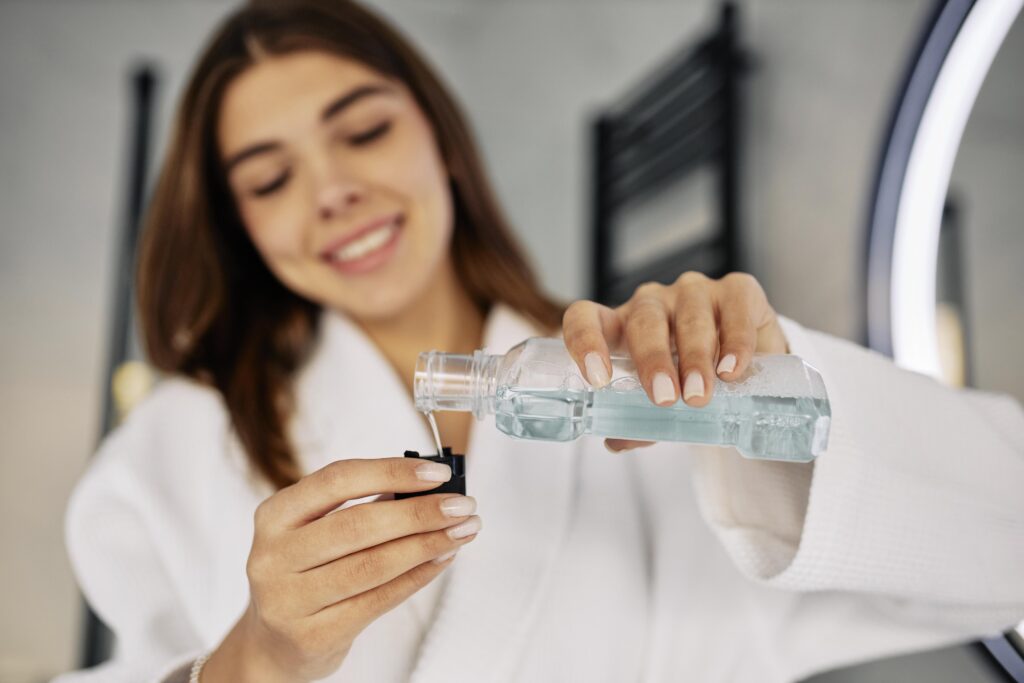
What does mouthwash actually do?
Mouthwash, also called mouth rinse, does more than just freshen your breath. Depending on the type you use, it can:
- Reduce harmful bacteria: Antibacterial rinses help decrease plaque and lower your risk of gum disease.
- Strengthen enamel: Fluoride mouthwashes can help prevent tooth decay by making enamel more resistant to acid attacks.
- Soothe minor irritations: Certain mouthwashes can ease discomfort from sores or after dental procedures.
Reach areas brushing misses: While it won’t remove plaque, mouthwash can rinse particles from hard-to-reach spots.
That said, mouthwash isn’t magic—it’s meant to complement, not replace, brushing and flossing.
The benefits of using mouthwash
For many people, adding mouthwash to their daily oral care routine has clear advantages:
- Fights bacteria: Even with careful brushing, bacteria can linger. Mouthwash helps reduce it, lowering your risk of cavities and gum inflammation.
- Extra fluoride protection: Especially important if you’re prone to cavities.
- Post-surgery care: Dentists often recommend gentle mouth rinses to keep surgical sites clean and aid healing.
The downsides (and common misconceptions)
While mouthwash offers benefits, it’s not a miracle solution—and sometimes it’s misused.
- Not a substitute: Mouthwash can’t scrub away plaque or food particles stuck between your teeth. That’s why daily flossing and proper brushing remain essential.
- Alcohol-based rinses may cause dryness: Many over-the-counter mouthwashes contain alcohol, which can dry out your mouth. A dry mouth actually increases the risk of cavities since saliva helps protect your teeth.
- Can mask underlying problems: Relying on mouthwash to cover up chronic bad breath might allow gum disease or tooth decay to go unchecked. If your breath is persistently unpleasant, it’s time for a dental check-up.
So…Is mouthwash necessary for everyone?
The short answer: No, mouthwash isn’t absolutely necessary for everyone. If you brush thoroughly twice a day with fluoride toothpaste and floss daily, you may not need an extra rinse. However, many people still benefit from adding mouthwash, especially if they:
✅ Have a history of frequent cavities
✅ Suffer from dry mouth or reduced saliva flow
✅ Struggle with gingivitis or early gum disease
✅ Need extra protection after certain dental treatments
The best approach is to talk with your dentist about your specific needs. We can recommend the right type of mouthwash, whether it’s an antibacterial rinse, a high-fluoride option, or an alcohol-free formula for sensitive mouths.
Bottom line: Mouthwash can help, but it’s not a standalone solution
Think of mouthwash as a helpful partner to your toothbrush and floss—not a replacement. For many patients, using mouthwash is a smart, simple way to give their smile extra protection. But the most important steps for a healthy mouth are still the basics: brushing, flossing, eating a balanced diet, and visiting your dentist for regular cleanings.
Ready to upgrade your oral health routine?
Not sure if mouthwash should be part of your daily care? Located near High Wycombe, Beaconsfield, Marlow, and Amersham, The Willows Dental Surgery offers expert local dental care—schedule your visit today! We’ll help you choose the best products and habits to keep your smile healthy for years to come.